

Recently, there has been a lot of discussion about data center CPUs in the era of agentic AI. Generally, when a vendor frames the discussion, it is around the product segments they compete in. Perhaps the comical part is that companies directly competing, take AMD and NVIDIA, have not been aligned on what they consider a data center CPU and the TAM for that. A great example we have called out since clarifying in early June 2026 is that NVIDIA considers part of the BlueField-4 DPU to be a data center CPU and includes it in its TAM and projected revenue. That includes both the single Grace CPU version, which is more of a successor to a BlueField-3, and the dual Vera version, which we previously would have called a dual-socket server. The latter makes a lot of sense given you would see a dual Vera CPU board and draw a parallel to a traditional dual-socket server. The former may seem odd, separating out the CPU and networking portions of a card. Other vendors would put a DPU card firmly in the networking category.
That is just the hardware in an AI data center. We have not even addressed the elephant in the room. The impact of agentic AI on server CPUs must extend to traditional enterprise, cloud, and edge locations. It will also cross formerly clean lines of compute, networking, and storage.
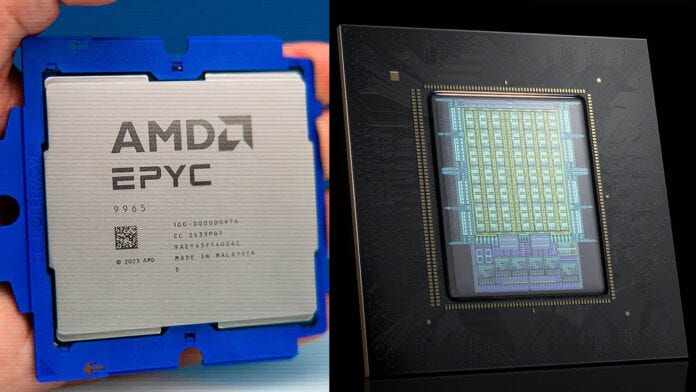
I have read so many news stories, analyst reports, and the like discussing agentic AI CPU growth. All of them have addressed only part of the workload. For context, even outside our traditional data center racks, in the STH studio where we film videos, we have been adding new machines every week and having to upgrade other parts of the infrastructure as the sprawl happens.
Every time I read one of these, I think about all that was missed. Instead of just thinking about it, I wanted to put down what is probably the most complete guide to how agentic AI is driving wild data center CPU demand. We are going to break this down into answering three key questions:
What is a “Data Center” or agentic AI CPU anyway?
Where do you find “Data Center” CPUs supporting agentic AI?
How does agentic AI impact the demand in those areas?
With that, let us get to it.
What is a “Data Center” or Agentic AI CPU anyway?
What qualifies as a data center CPU, or one that is an agentic AI CPU these days? One common take is that it is the sockets traditionally occupied by mainstream Intel Xeon and AMD EPYC processors. I say “mainstream” since there are also embedded processors like the Intel Xeon D line, which launched in 2015 as a low-cost Facebook Yosemite processor, but has morphed into a higher-cost integrated networking platform above the Atom line. AMD also offers the EPYC 8000 series, which targets different sockets. There are also lower-end Xeon and EPYC platforms built on mainstream desktop CPU parts for lower-cost servers.
The next question is how far down the embedded path we go. Would a Marvell Octeon 10 DPU or an Annapurna Labs CPU found in a storage device or network switch count? What about an AMD EPYC Embedded 3001 series CPU found in our 51.2T NVIDIA switch? One may have said “no” to this a few years ago, but if NVIDIA calls the CPU portion of a BlueField-4 DPU part of its data center CPU TAM, then those probably need to be included as well.
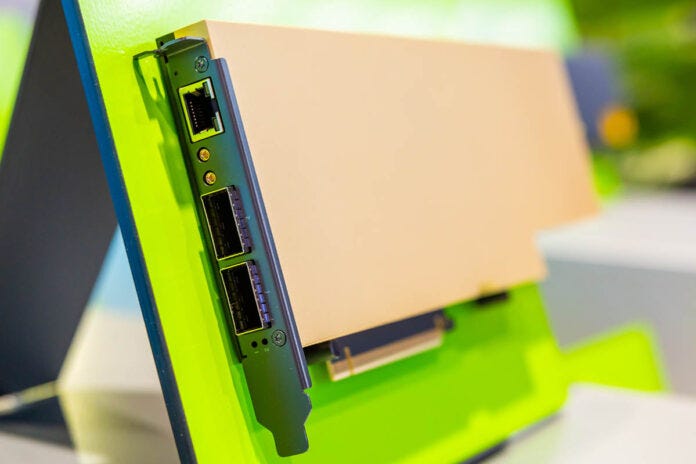
Now let us start to go down that rabbit hole. A Marvell Structera A has 16 Arm Neoverse V2 cores, along with DDR memory controllers, and a CXL interface so hyperscalers can add compute along with memory capacity and bandwidth. Arm Neoverse V2 is used in the NVIDIA GB300 platforms and in the more traditional BlueField-4 DPUs. Since a BlueField-4 DPU has its own memory, cores, and a link back to a host CPU, and that is part of the TAM, is the Marvell Structera A then a data center CPU as well? You would have to say yes. Even if you asked whether its demand is impacted by agentic AI, you would again have to say yes. I picked this as a thorny example since you could say compute attached to memory could also be an accelerator or XPU, but we count them as CXL controllers.
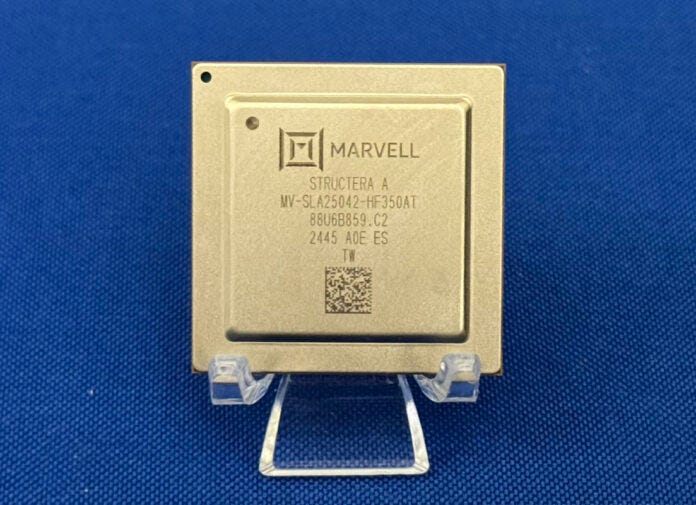
Going another level down, what about the ASPEED or Axiado BMC, and the closed versions like Dell iDRAC and HPE iLO? They have their own Arm cores, memory, storage, networking, and OSes, and they're affected by AI data center deployments because they run on accelerator servers, CPU-only servers, storage, networking, liquid cooling, air cooling, and many other devices.
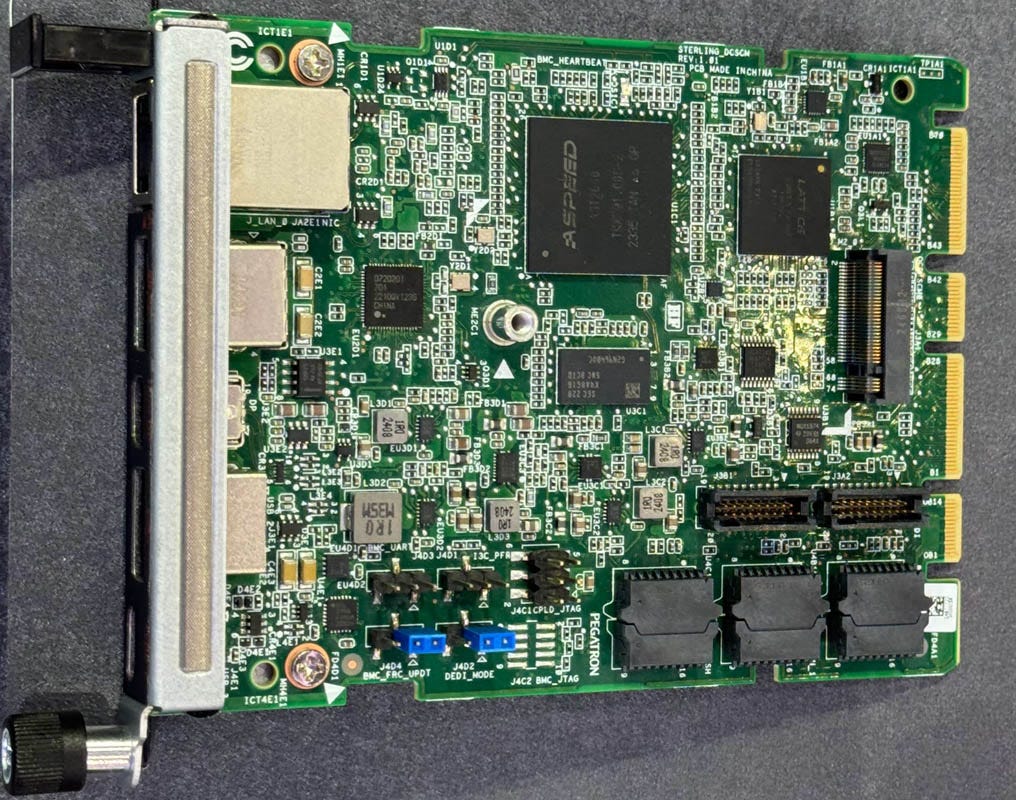
What about going another level down, since many servers have FPGAs with Arm cores? Likewise, traditional rack PDUs often run web servers and API endpoints on what may list for $500, but the management modules cost under $50. Some hardware TPM devices even have low-power processors like an Arm Cortex-M. What about SSDs where the controllers have cores? How about the facility’s security cameras, which can often do AI detection on device?
From a location standpoint, we can call it a data center, whether that is a cloud data center, dedicated AI factory, enterprise data center, or edge data center. Telco racks are probably included if they are in central or branch offices, and perhaps even attached to a tower.
Perhaps a better test is not how fast the CPUs are or what type of facility they are housed in, but what type of device they are in. A GPU server’s host CPUs surely are. CPUs in a rack of CPU-only compute servers meant for running agentic AI sandboxes or even orchestrating Kubernetes across GPU clusters also surely are.
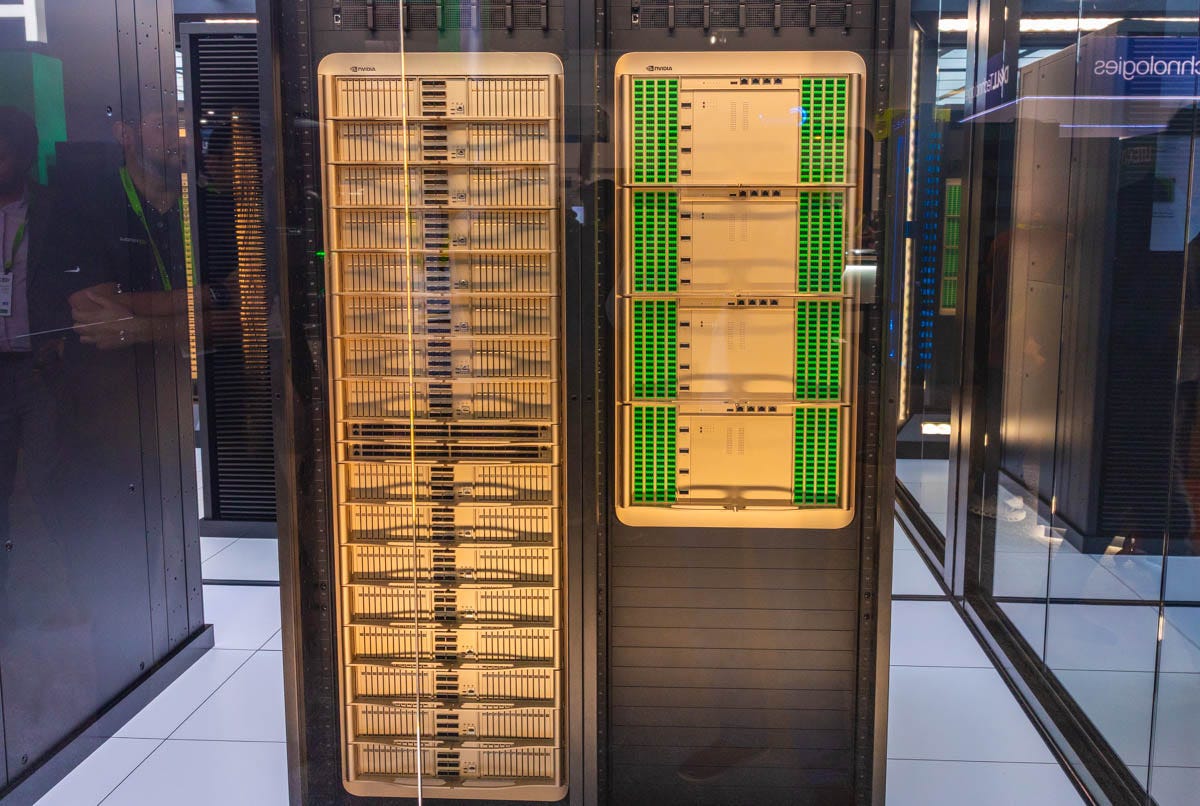
What about storage? Now that we have NVIDIA STX, do we say KV cache storage CPUs are for agentic AI use cases? What about the VAST array (running on a DPU or not) used to store training data or session artifacts created during agentic workflows? What about the log storage from agentic workflows or the archival disk and tape arrays?
Another test might be if the CPU is directly running an agentic AI workload. If a CPU is running agentic sandboxes for OpenAI or Anthropic, then of course it is an agentic CPU. What about if the BMC is collecting data for an agentic management app and running some analytics at the BMC to minimize data flow? If an agentic component optimizes storage performance and layouts, is the storage processor an agentic AI processor?
Maybe we could just get more definitive. If a CPU uses over 100W and is somewhat related to agentic AI workloads, then it is an agentic CPU. Another option is to draw a line, saying it must have more than 16 or 32 cores.
Asking this many questions, my point is that it is very easy to get overbroad, or too narrow in your definition, depending on which way you want to lean.
Here is a set of tests I find useful for a CPU installed in a data center:
It must be multi-core - Single-core processors went out of style 20 years ago in servers, so if you see a single-core chip, it is likely too embedded of an architecture. I actually use 9 cores as a minimum. You can argue this should be 4 or 8, but 9 gets rid of a lot of lower-end parts
It must consume over 35W - Anything below this threshold feels a bit too embedded. We are using a lower threshold here just to keep out some of the miscellaneous chips. It is fair to say, however, that some companies use Apple Mac Mini M4-class (base model), or lower-end, chips as physical agent machines, so those may be excluded.
It must be in the actual data path for a general-purpose use case - The FPGA controlling blinking lights, or the low-end CPU powering a display in an in-rack CDU do not fit. Also, this test removes BMCs since those are more for collecting telemetry data.
That may be a crude set of tests, and the thresholds are intentionally low so as not to exclude some devices. Still, that weeds out a lot of the parts you would look at and not think fall into the population we are trying to reach.
Now let us get spicier and blow some minds about where you might find them, which we are leaving purposefully broad in this section.
Where do you find “Data Center” CPUs supporting agentic AI?
Now for the challenging part. People massively undercount the impact of agentic AI workloads and draw focus away from where the CPUs actually are found.